I was a ghost in 2016, can I still do the trend?
Shit's fucked. So who can blame us for wanting to escape to simpler days? Before we knew what we know. The grass was greener in 2016....wasn't it?
This post deals with suicide and self harm. It also deals with healing.
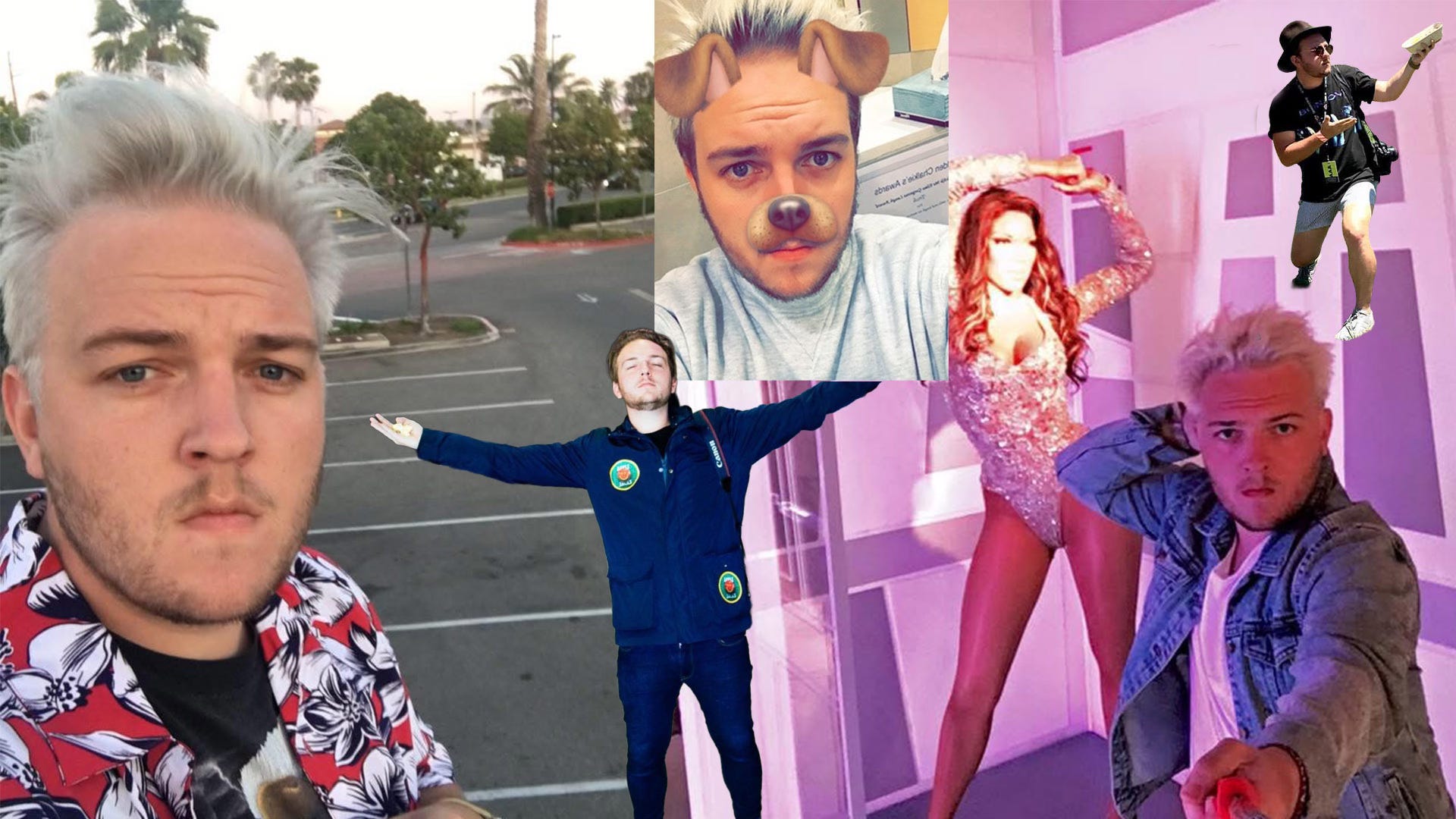
Nostalgia is a powerful drug, and we don’t even need a prescription or a number to get it. Just a few swipes on socials and you’ll get a hit for free. A quick little trip of longing for a time that never really existed.
Why is it so alluring? Is it the power we get to have over our former selves? Hah! We know what happens next, and they don’t. Or perhaps it's less power and more jealousy? We carry more pain than they do after all.
When I look at photos from 2016, I don’t feel powerful nor do I feel jealous. I just feel a strange sense of grief.
I wrote about this feeling in 2024:
“Today, I look at photos from a time before therapy and grieve that man as a loved one I’ve lost—not because I wish I was still him, nor to escape accountability, but because I see his pain, knowing that pain would carry him to the very edge.”
To understand what I meant, we do actually need to take a trip back to 2016. I was 23 when I wrote (somewhat clumsily) my first public post about my mental health. At the time, it felt enormous. Like a breakthrough, like bravery.
This is what I posted to Facebook:
“For much of my adult life I’ve toiled with issues surrounding depression and anxiety. Why? I don’t really know. That’s the most frustrating thing. Even though I’m surrounded by loving family and friends, have had opportunities and experiences most of the world could only dream of — I still felt down, really fucking down. It’s compounding, an infuriatingly vicious cycle. The guilt drives the sadness and the sadness drives the guilt.”
There I was listing my privileges as if to say: “I know, I shouldn’t feel this way but I do and I’m sorry”. Trying to model vulnerability while apologising for needing to be vulnerable in the first place.
“Undoubtedly one of the hardest things has been not knowing when or if I could share certain thoughts or feelings with my friends and family. Not wanting to appear weak or worse become a burden or a nuisance. A dampener or a wet blanket. Then the absolute heartbreak when these thoughts and feelings finally do come spilling out… and it’s met with classic lines such as ‘first world problems’, ‘man up’ or ‘I can’t deal with this right now’.”
I could name the fear without actually noting the feeling. I was more worried about the consequences of admitting I wasn’t okay, than the not being okay.
Not long after I wrote that post, I was hospitalised for self-harm for the first time.
After that, I went to therapy. Once. Maybe twice? I didn’t like the therapist, I felt judged rather than helped, and reached the dangerously common conclusion: I should be able to handle this myself.
Without even knowing it, a complex system had been built inside me, by an even more complex system outside of me. Patriarchy (you may have heard of it?). It taught me to arrest my own tenderness before anyone else got the chance.
A year later, in October 2017, I wrote another post to announce that I was cured!
“The other day a friend of mine described me as a ‘happy person’. It hit me like a tonne of bricks — not because they were wrong — but because they were right.”
Then I told the story of what had happened:
“A little over a year ago I found myself in a place I never suspected to be found, for reasons I never thought possible. It was hands down the scariest moment of my life. For no real, quantifiable reason I began to slip into a mental space where the slightest breeze might knock me over.
Logically, of course, I looked to drinking and partying to balance the scales. Drinking myself into inconsolable stupors and saying and doing things that hurt people I love and care about, I became a supremely unfair burden to those around me. Behaviour which ultimately cultivated in a trip to North Shore Hospital emergency in the wee hours. While at the time I saw no way forward, it marked an undeniable new fork in the road for me. This wasn’t me, and it was never going to be me again.”
Oh boy.
“Positivity is a choice. Pick it and keep picking it.”
At the time, that probably felt like wisdom. Like a promise I could keep. What I couldn’t have known was that it was still me. And it would happen again. And again. And again.
From 2017 until 2020, I didn’t do the work. While I stayed away from hospital, I also stayed away from therapy. I was still using the same harmful coping mechanisms, just better hidden. Who can blame me? I was playing by the rules patriarchy had taught me: recover alone, project strength, #positivity my way out of pain. And it nearly killed me.
In 2020, I was sectioned under the Mental Health Act after coming extremely close to harming myself so badly, so finally, that I would never have the chance to heal.
Years later, I’d write about the worst days of my life:
“But my story didn’t end, like the stories of so many men did, in that dark place. Late one night, after a particularly severe panic attack, I was diagnosed with borderline personality disorder. During the episode, I gazed at my parents properly for the first time in months and saw that they both looked like they had aged a decade in a few weeks. For the first time, I truly understood that while I was suffering, I was also causing immense pain to those around me. I realised then that I had to break the destructive cycle. No one could fix me. They could help me, but only if I was willing to help myself.”
Six months of DBT and years of therapy later I finally took form. I reverse-faded into existence like that family photo at the end of Back to the Future.
But DBT (Dialectical Behaviour Therapy, a type of group therapy) wasn’t enough on its own. Yes, I learned to regulate my emotions. To improve my interpersonal skills. To sit with distress. To understand and respect myself and my needs. Skills I use every day of my life now, some days better than others. But what actually allowed me to truly form was learning to see the system that had shaped my suffering in the first place.
I couldn’t begin to heal from my undeserved pain without understanding my unearned power. They came from the same place.
After these years of this exploration, I wrote in my book:
“For me, this recognition has meant doing the messy work of scrutinising my own blemished history, mapping my behaviours, my entitlement and my shame. It’s meant mourning the boy I once was, before I learned to see my softness as weakness, my sensitivity as a flaw. But I’ve also laid to rest the man that boy became.
Unlearning the programming of our lifetime, stepping outside the confines of traditional masculinity, is a life journey. To be ‘real men’, to be good men, we have to write a different story of manhood altogether. One where strength is not about domination but kindness and openness, where protection is not about ownership but allyship with women’s liberation.
At the end of the day, this is about reclaiming our full humanity as men. Refusing to settle for some hollow, performative ‘strength’ that comes at the cost of subjugating others. We didn’t earn the corrosive power we have in the first place, so it shouldn’t be an issue for us to use it to lose it.”
Today, I read my own book the same way I read those 2016 and 2017 posts — with distance. In the year and a half since I wrote that passage, I’ve changed. My understanding of both my mental health and patriarchy has shifted. And while I cringe at some of what I said, I think there’s value in having said it.
The ghost I was in 2016 didn’t know what he couldn’t see yet. Just as I can’t see today what will one day be obvious to me. That’s the human condition. We can’t wait until we’re perfectly formed to speak or act, because that day never comes.
We're all messy concoctions of nature and nurture, culture and conditioning, harm and privilege. We’re all evolving, all the time, in different directions and at different speeds.
Some of us don’t realise we’re caged. Others are just beginning to see the bars. Some have been shouting about it for decades. If we’re serious about dismantling the systems that hurt us all, we have to accept two things at once: not everyone is harmed in the same way, and not everyone can see the systems of harm in the same way…yet.
We can't unfuck the present by escaping to the past, trying to fit the minds we have now into the bodies we had then. We unfuck it by learning from the versions of ourselves who were doing their best with worse information, and applying those lessons, however imperfectly, in the present.
The only future we can predict with certainty is that the system will keep doing what it does.
Longing for the past won’t change that but learning from it will.


You wrote it so perfectly I'm going through something similar and it opened my eyes. I always want to go back to the past even though I was even worse then but this time I know what to do. This is the problem we keep on thinking about what could've been not what we can do right now, it's a cage of mind and somehow so hard to escape. Cheers to you for understanding the system and wish you a beautiful life!
I heard Rob Hopkins ask the other day what would it take to have nostalgia for the future? What collective imagination and yearning to build something beautiful, your thoughts dovetail beautifully with his. Thank you!